Tuesday, June 21, 2011

Summer Solstice


Berries and Legumes in Paterson Children's Garden

today
the longest day of the year

i shudder at the thought of the darkness returning again
how could it be that we embrace the light so strong now and in a few months time it will be cool again?
*shudder*

as with every earth holiday, today is a day to take stock and honor the transitions of seasons and the paths that we have taken. today is a day to hone one's intentions for the coming days until lughnasadh (lammas) the harvest holiday of aug 1.

today i am in a whole different realm than i was on the winter solstice. 6 months have passed and i am now in a new home with my loving partner and her daughter. we have moved to millburn and i am so much more comfortable living close to the reservation and a walk away from the creek. neighbors are nice and the space is comfy. :)

Sarah and Leah painting pink

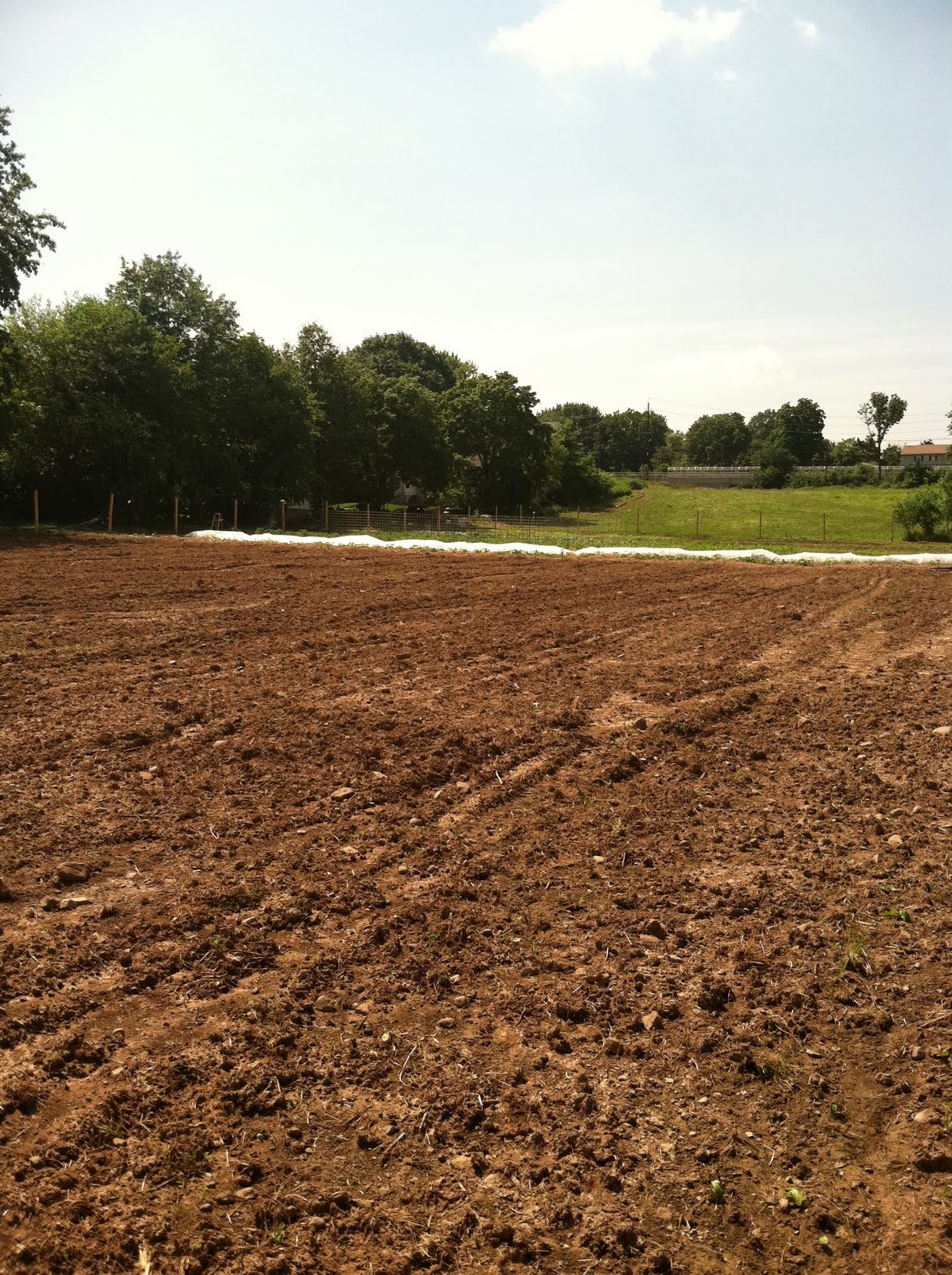
i am also working at a new job for an outstanding non-profit, City Green. i am teaching adults about farming. i am growing food for folks in Paterson and Clifton. i am working hard at starting up a new farm and growing enough food to have viable markets in the food deserts of Paterson so people will have access to fresh food. we will be taking food stamps and doubling their value thanks to Wholesome Wave. so many wonderful things are happening on this lovely day and here are some pictures of the progress

May at Schulties Farm in Clifton
Schulties Farm at Clifton
Paterson Farm at Eastside Park

I have 3 new beehives too!

a swarm that was probably knocked down from a tree in maplewood
it is so nice to have bees where i am and not have to travel to see them :)

buckwheat is going in tomorrow :)


Friday, May 6, 2011

Ranting of a toad

Analogy:

Lets say you are feeling a little off. Maybe a cold, maybe a bad diet, maybe lack of exercise, maybe you are just constantly told to behave yourself and feel no room to be yourself. Who is to say? No tests can measure the cause.

So the doctor prescribes some prophylactic antibiotics. You take them like the good patient that you are and you get a bad case of diarrhea. The doctor tests the diarrhea and declares that your problem is...oh lets say...nosema...

Given what I know about bacteria and the delicate balance of life inside of our bodies as well as most other life forms on this planet, I am venturing to guess that nosema is no CAUSE of anything..

Sunday, April 17, 2011

Update on the state of the Japanese Hornfaced Bees in my Pilates Rope

For those of you who did not read the previous post from last spring about the Japanese Hornfaced Bee, catch up on it here. Essentially this new bee friend came into my apartment and moved into my sadly seldom used pilates cord. After roasting in the summer sun in an attic apartment I wasn't surprised to see no bees emerge in the fall. I waited to the spring to see if they would emerge then, but to no avail. So an autopsy is done...

razor blade to cord with crunchy bees under the plastic
there was a layer of mud in between each of the larvae
the bees were fully developed and had this tiny mouse turd looking
things on them.


we took out the magnifying glass and looked closer...
I am not sure what they were? Bee poo? or maybe a parasite of some kind that killed
them? They looked like little grains to me.

Bee Parts
Japanese horn faced bee wing with pollen on it

And the pilates cord in back in use...a bit shorter for the journey, but usable :)

Monday, April 11, 2011

Spring has Sprung!


Upon our arrival back from Massachusetts today we were greeted with muggy, hot weather. Along with the heat was the blooming cherry trees in front of our house, COVERED in bzzzz. Not only were there honeybees, there were mason bees, wasps and bumble bees! WOW, WINTER IS OFFICIALLY OVER!!


Notice the black dots in the picture...the big ones are bumbles...

Tuesday, April 5, 2011

The Significance of Swarming (as seen in NOFA-NJ newsletter)


Learning about bees has been one of the most rewarding endeavors I have ever embarked on. I have been a treatment free beekeeper since 2007. The way that I keep bees requires me to pay much closer attention to my environment because I have to understand what health and disease truly are. Coming from a point of view that all life is sacred and connected, I appreciate the profound message of interconnectedness that is permeating our society via the ancient honeybee. Bees have been the focus of much study lately due to the mass die-offs that are happening in commercial beekeeping. There are many factors that can be attributed to this problem, and swarm prevention may be a part of that. Swarms are a natural progression in a healthy hive, and allowing such reproduction may very well contribute to the overall health of the colony.

Inside the hive the queen bee does not rule, for there is no hierarchy. She maintains the hive with her scent and by the remarkable fact that she lays hundreds to thousands of eggs a day. A queen bee egg is laid vertically, in alignment with the sky and earth, and fed a continuous diet of royal jelly as she grows into a fully formed queen. By contrast, the worker bees (the females in the hive) and the drones (the males) are formed from an egg laid horizontally and fed a diet mainly of bee bread -- a mixture of pollen, nectar and microbes.

When a hive is healthy and strong it will want to multiply. This is the absolute beauty of the honeybee colony. The old queen will lay a fertilized egg(s)s in a vertical queen cell(s), and the workers will begin feeding the new queen(s)-to-be a milky substance excreted from their heads called royal jelly. When the queen cells are about to hatch, the old queen and about a third of the colony will engorge itself with honey and fly off to find a new home. Biodynamic beekeeper and author Günter Hauk likens this to parents reaching their 60s, leaving the home to their kids, and going off to start a new life elsewhere. This is another selfless act of the bees.

All at once the queen and thousands of bees take flight. They find a nearby spot to gather while scout bees venture off to find the perfect hollow vessel in which to start building comb. Once a spot is agreed upon, the cluster of bees will disperse and fly off to their new home. This new home will be a hollow vessel such as a hollow tree trunk, an eave of a home, a pot, or a birdhouse. They do no structural damage to the vessel they choose as their new home. The hive begins building comb as soon as it settles in; the queen beginning to lay eggs as soon as there are cells to fill. Thus a new colony is born and life continues on for the great honeybee.

Many beekeeping books and courses discourage swarming. Coming from a capitalistic standpoint, swarms could mean a loss of field force, which would mean a loss of honey production. Given that most authors and teachers are coming from a commercial background, it makes sense that this is routinely taught. But upon further examination of all that plagues the honeybee faces, we might want to reconsider our actions of swarm prevention.

As I mentioned earlier, swarms are an indication of a healthy, vibrant hive. Swarm prevention is like birth control. In a climate where hives are dying at such a rapid rate, it seems only logical to allow the reproduction of healthy hives. Swarm season in this area begins in May -- an exciting time for beekeepers. There are many tools beekeepers can use either to encourage swarms or split hives in a way that mimics the natural inclination of the bees. Beekeepers can even register with local police or fire departments to be on call to trap a swarm if spotted in the area. (Free bees!)

I have seen that hives that are allowed to swarm have a much higher survival rate than those routinely prevented from swarming. In addition, swarming creates a period of time in the brood chamber where there is no brood: an excellent way to purge mites from the hive, since the parasite’s larvae is deprived of its food source during this time.

When a hive is strong and robust it will reproduce. Trusting nature and not interfering is the recommended course of action. If you are focusing on hive health and pollination, it is best to support the natural instinct of a colony rather than impose your own will. When we let the bees be we can learn much about their health and healing. I do believe that there are times to help bees when they are in need (such as when they appear to be starving), but swarming is not a time of distress; it is a time of celebration! May our skies be filled with buzzing this summer!

Sunday, March 27, 2011

Images from a cut out of a bird house


This is a video of Mike Tarbett doing a cut out of a hive that had settled into a birdhouse. He did this as a demonstration at the Southeast Organic Beekeepers Association conference in Florida.


Tuesday, March 15, 2011

Absconding


"People who have found themselves in the midst of a mighty swarm or who have observed this incredible act from a distance cannot help but admit that the experience itself evokes rather indescribable thoughts and emotions. Swarming is a powerful and vibrant expression of a healthy, well-functioning bee colony. It is at once mysterious, lucid and transcendent. Swarming supersedes, by its very display and magnitude, all that is commonplace, 'status quo' and subdued in our everyday human activity. We may discover upon closer examination why swarming is so intrinsic to the bee's physical and spiritual health"
-Gunther Hauk, Toward Saving the Honeybee

A cluster of bees on a branch
"A swarm!! A swarm!" Brenden bounds excitedly into our beeginner top bar class. 90% of the newbees rush off to the congregating area of the bees. A swarm is a hive's way of reproducing. Where there was once one hive there is now two. The old queen has laid an egg that will become the new queen and the old queen takes about 1/3rd of the workers of the hive and sets off to start a new colony. All at once the queen and thousands of bees take flight. They find a nearby spot to gather while scout bees venture off to find the perfect hollow vessel to start building comb in. Once a spot is agreed upon (through the waggle dance), the cluster of bees will disperse and fly off to their new home.
Bees taking off from a cluster

AS the student interest waned and they started heading back to class, someone noticed that a newly formed nearby nucleus colony was empty. This wasn't a swarm it was an absconding. The bees had just up and left. Bees will do that. Possibly because of the fire ant colony that the hive was inadvertently put on top of. Possible they were sick of being moved around, maybe they just felt that their new living quarters were just unacceptable. They had not invested much into their new home so they just left. Who knows why, only they do. Bess are like that.

The next day it was pretty obvious why they absconded. Sam had been called to do a bee removal from a soffit. Looked like a pretty easy job.


Sam feeling around inside the soffit to find out where the comb is

Notice the comb through the crack.

There is the colony with mango honey

Easy enough, dripping mango honey everywhere, new comb sloppily being banded into lang frames to take home, stings galore...but the queen, where was the queen? Sam is known for his queen finding abilities, but this day he just couldn't get her. After hours of trying he decided to pull out the bee vac.


Right after turning the vacuum off he spotted her (one does not want to vacuum the queen if one can avoid it as she may get hurt). He hesitated and reached for her. But in such cramped quarters

and the sneaky bug that she is, in that moment she and the rest of the bees (the bees with brood, comb and honey in the box along with all the bees in the house) took off. Took off is such an easy thing to say. Absconding is a word that folks use. But to describe the absolute palpability of that moment is beyond me. Sam and I just looked at each other KNOWING that something was happening but we didn't know what. Like the course of life had been altered for everyone in that moment. An excitement was in the air and maybe even a touch of sadness as they were leaving their babies and had to start all over again.


Bye Bye bees. Thanks for the magical experience!